AERRL sets out unified ERTMS plan and infrastructure priorities by the end of a decade
The Association of European Rail Rolling Stock Lessors (AERRL) has unveiled its latest Manifesto, covering the period from 2024 to 2029.
11.75 billion CZK (approx €468 million) will be used e.g. for the introduction of the European Rail Traffic Management System (ERTMS) and the construction of safe level crossings.
The letter highlights concerns that a move towards national-level allocation could impact Europe-wide coordination efforts, potentially leading to fragmented investment strategies.
The 34-month initiative will validate FRMCS specifications through laboratory and on-track trials across conventional and high-speed rail lines.
The International Union for Road-Rail Combined Transport (UIRR) has outlined key policy expectations for the European transport sector for the period 2024–2029.
Stakeholders stressed the need to harmonize policies, reduce bottlenecks and improve cross-border coordination in order to strengthen rail freight and intermodal systems.
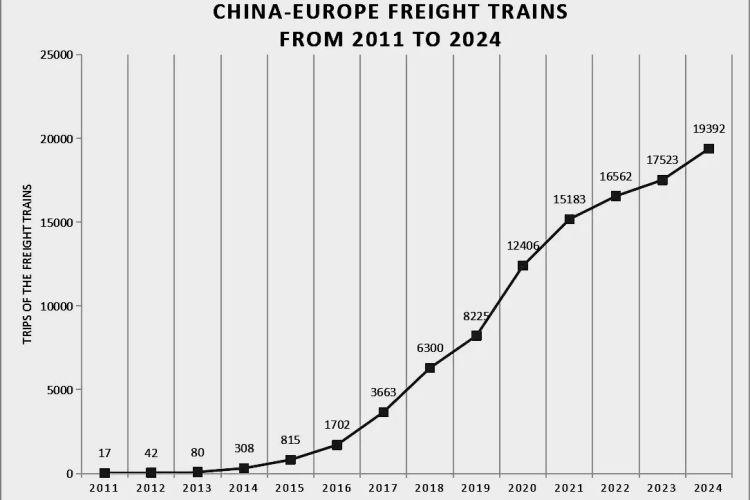
According to China Railway Container Transport (CRCT) statistics, 19.392 China-Europe trains were launched in 2024, shipping a total of 2.077.216 TEUs of goods, up 10.7% and 9.2% respectively.
With renewed mandates for its leadership team, the association aims to tackle pressing issues in the European railway sector, including decarbonization, interoperability, and regulatory harmonization.
Twelve European industry and transport associations have issued a joint letter advocating for comprehensive changes to the Railway Infrastructure Capacity Management Regulation.
PKP Polskie Linie Kolejowe has announced a tender for the modernization of the Białystok–Ełk railway section, part of the Rail Baltica corridor.
The project progresses with two newly signed contracts with GRK Eesti, aimed at developing the contact network and supporting infrastructure.
A recent amendment to the Railway Act in Slovakia lowered the minimum age requirement for locomotive drivers to 19, starting from 1 January 2025.
A recent analysis by Transport & Environment (T&E) has evaluated 27 European rail operators across eight service criteria, including ticket pricing, reliability, and onboard amenities.
Kombud Group has introduced an approach to implementing ETCS Level 1 Limited Supervision (ETCS L1 LS), designed to replace decommissioned Class B systems across European rail networks.
The upgrades, financed through state budget contributions and the EU's Connecting Europe Facility (CEF), amounted to over EUR 9 million.
The transition follows years of preparation, including extensive testing, staff training, and collaboration with transport operators.
The current steps are aimed at maintaining transport capacity for both freight and passengers, as well as supporting broader infrastructure needs throughout Ukraine.
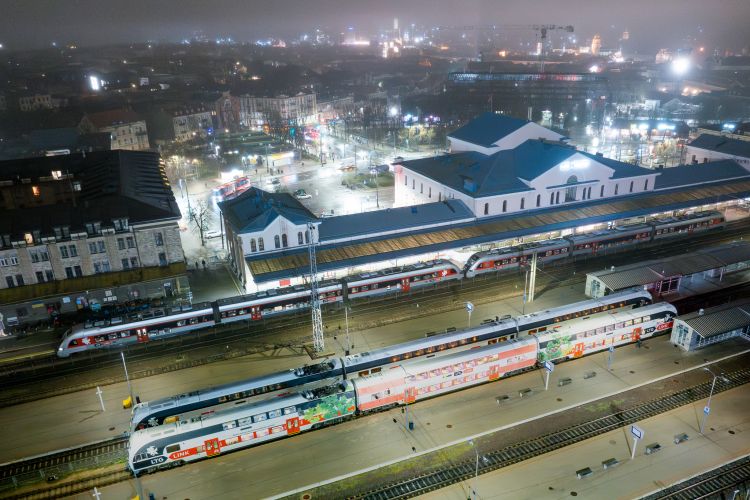
Passengers traveling between Tallinn, Riga, and Vilnius will have a new rail option starting January 6, 2025, with two transfers.
With a total investment of €85.91 million, the initiative will improve logistical capabilities for freight and passenger transport.
This approval is contingent upon DB Cargo implementing a thorough restructuring plan aimed at restoring profitability by the end of 2026.