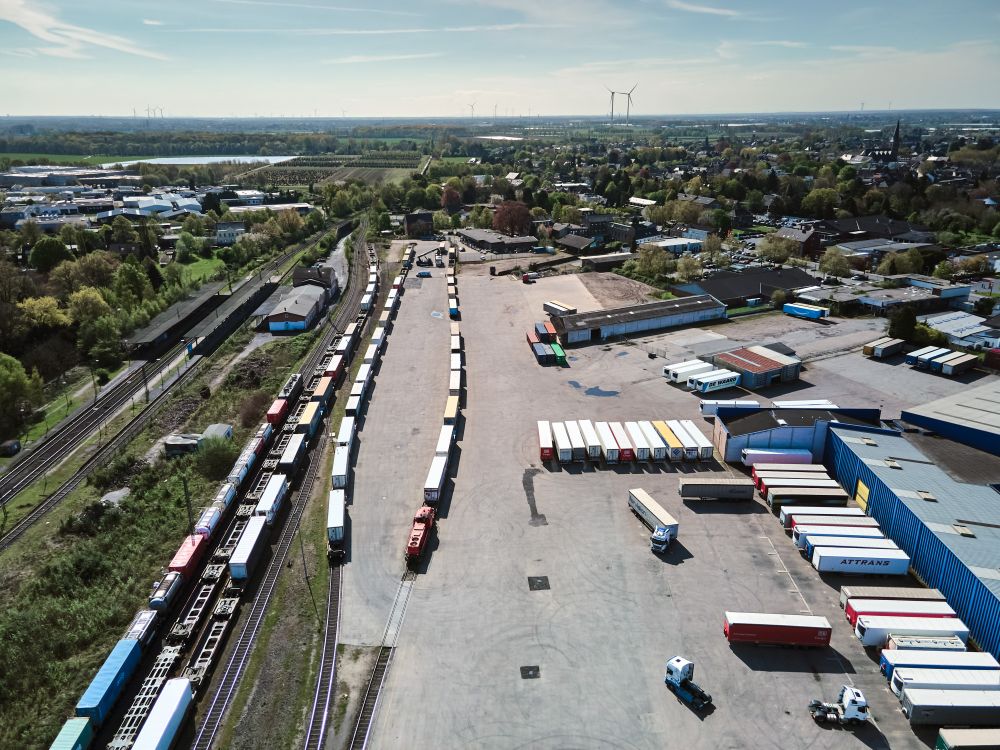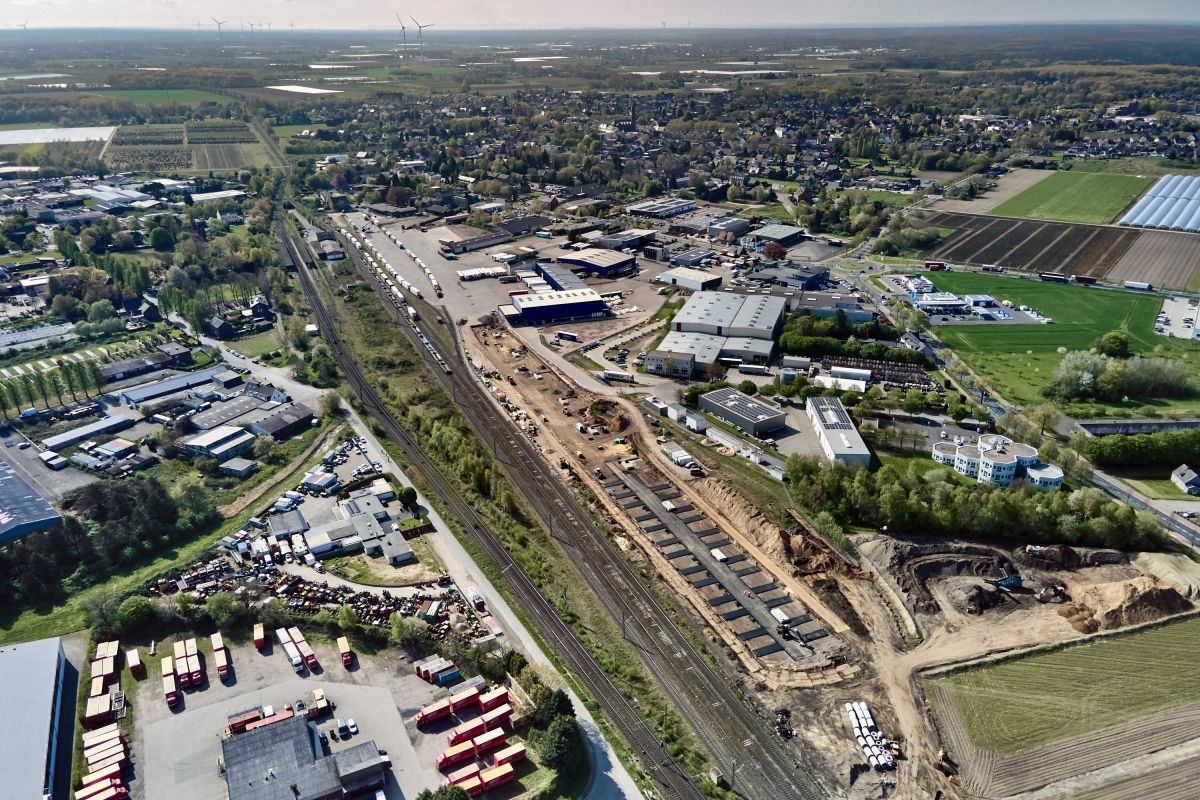
CargoBeamer has taken over operations at the Kaldenkirchen terminal in Germany, while continuing construction work to expand the site into the country’s first terminal equipped with CargoBeamer’s automated handling technology.
Operational responsibility for the existing terminal was transferred to CargoBeamer in April 2026. At the same time, expansion works are progressing in parallel with daily operations, with the first phase scheduled to go live in early 2027.
Kaldenkirchen is already a key point in CargoBeamer’s intermodal network. The company has operated services between Kaldenkirchen and Domodossola for several years, enabling the rail transport of non-craneable semi-trailers on one of Europe’s important north–south freight corridors.
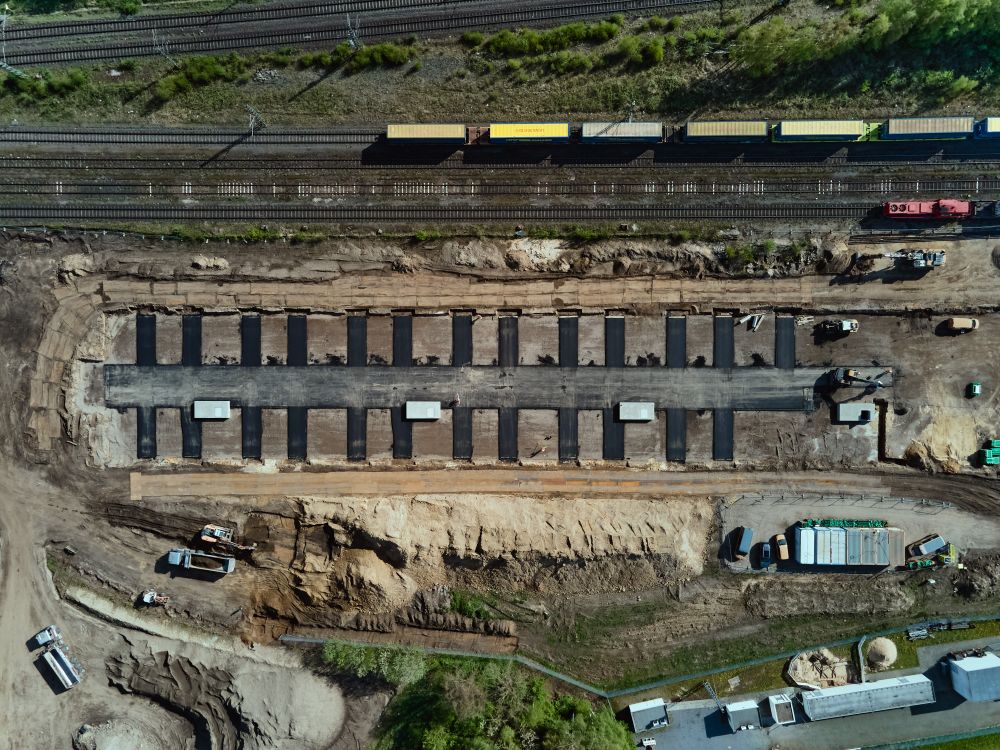
The route currently runs with 20 weekly roundtrips, making it one of the highest-frequency services in the European intermodal market. Today, loading units are handled at the existing terminal using reachstackers.
With the installation of CargoBeamer’s horizontal handling technology, the terminal will be able to process all types of semi-trailers through a more automated transshipment system. From 2027, annual capacity is expected to double to around 140,000 loading units.
After full expansion, the terminal’s capacity is planned to exceed 200,000 loading units per year, more than three times the pre-expansion level.
The project also fits into CargoBeamer’s wider strategy of building proprietary terminal infrastructure across Europe. The company says the expansion of its Domodossola terminal with CargoBeamer technology is set to follow shortly, creating a high-frequency corridor between the two automated sites.
For the intermodal sector, the Kaldenkirchen project is significant because terminal capacity and handling speed remain key constraints for shifting more semi-trailer traffic from road to rail. By investing directly in terminal infrastructure, CargoBeamer is strengthening the operational base behind its cross-Alpine network.
The development also underlines the growing importance of specialised infrastructure for non-craneable trailers, a segment that remains central to expanding intermodal rail beyond standard container and swap-body traffic.