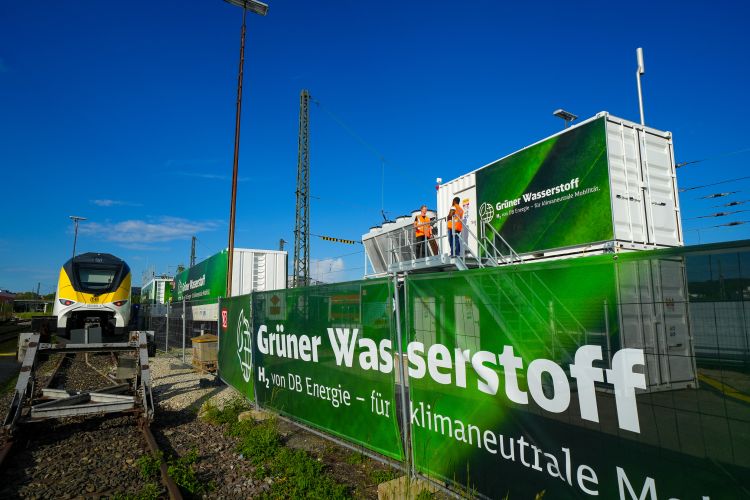
DB Energie, a subsidiary of Deutsche Bahn, is testing technologies to feed renewable energy directly into the rail network's overhead lines at an innovation centre in Tübingen, Germany. At the heart of the initiative is a new type of sector coupler, which acts as a bridge between the overhead line, a hydrogen generation system and a battery storage unit. This is the first time in Germany that such a system has been used to produce green hydrogen for hydrogen-powered trains.
The company aims to be carbon neutral by 2040. Currently, 68% of its traction power comes from renewable sources, with ambitions to reach 80% by 2030 and 100% by 2038. In addition, all long-distance ICE, IC and EC trains in Germany have been running on 100% green electricity since 2018.
“We are planning today what the climate-neutral mobility of the future will look like and how we will prepare the rail power grid for the further expansion of renewables. In the Tübingen innovation hub, we are therefore trialling the use of innovative technologies and gaining insights into how we can react flexibly to so-called dark doldrums in the future. After all, the security of supply of the traction current grid will remain a top priority in the future. Trains must be able to run even when the sun is not shining and the wind is not blowing,” said Andreas Hoffknecht, Managing Director Technology at DB Energie GmbH.
Traditionally, the source of this electricity has been a small number of large fossil fuel power stations. But as DB switches to renewables, the grid will see more and more smaller feed-in points. These will provide variable amounts of green electricity. In contrast to the traditional large converter plants, sector couplers can feed locally generated green electricity - such as wind or solar power - directly into the overhead lines of the railway system. This reduces the need to transport electricity over long distances, thereby saving grid capacity. These couplers can also be connected to storage technologies such as batteries or hydrogen storage, allowing DB to store and use green electricity as and when it is needed.